A saree may be one of the most recognisable garments in Indian fashion, but much of its visual character comes from the blouse. The neckline, sleeves, back design, embroidery, fabric, fit and finishing can completely change the way a saree looks.
Creating a saree blouse, however, involves much more than drawing an attractive design. A designer has to understand the wearer, fabric behaviour, body measurements, construction techniques and the relationship between the blouse and saree. What begins as a pencil sketch eventually becomes a carefully constructed garment through several stages of planning, sampling and stitching.
For aspiring designers, understanding this process offers a practical look at how fashion ideas are transformed into wearable clothing.
Finding Inspiration for the Blouse Design
Every blouse design starts with an idea. Inspiration can come from many places, including traditional Indian clothing, architecture, artwork, cinema, vintage garments, runway collections, embroidery traditions, or current fashion trends.
A designer may begin with a simple concept such as a structured blouse with a contemporary neckline or a traditional silhouette featuring hand embroidery. At this stage, the objective is not to finalise every detail but to establish the overall design direction.
The saree itself also plays an important role.
A heavily embroidered saree may require a relatively restrained blouse, while a plain or lightweight saree can provide an opportunity for a more elaborate blouse. Colour combinations, fabric textures and the occasion also influence the design.
For example, a blouse intended for a wedding reception may feature embellishments, dramatic sleeves or a statement back, whereas a blouse for everyday or office wear may focus more on comfort and clean construction.
Developing the Initial Sketch
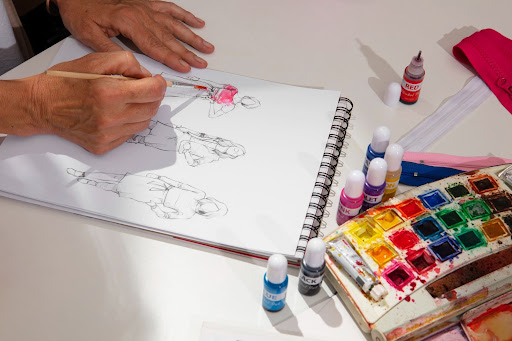
Once the concept is clear, the designer begins translating the idea onto paper or a digital design platform.
A fashion sketch helps communicate important visual elements such as:
- Neckline shape
- Sleeve length and style
- Front and back proportions
- Waistline placement
- Embroidery areas
- Decorative details
- Fabric drape
- Overall silhouette
At this stage, designers may create several variations before selecting the strongest option.
A neckline that looks attractive in isolation may not necessarily work with the intended fabric or wearer. Similarly, an elaborate sleeve may need modification if it restricts arm movement.
This is why fashion design is both creative and technical. The sketch represents the designer’s vision, but it must eventually work as a real garment.
Understanding the Saree-Blouse Relationship
One of the most important aspects of blouse design is understanding that the blouse should complement the saree rather than compete with it.
Designers consider the saree’s:
- Colour
- Border
- Motifs
- Fabric
- Embroidery
- Draping style
- Occasion
Suppose the saree has a wide traditional border. Repeating the same visual element along the blouse neckline or sleeves can create a coordinated appearance.
On the other hand, a minimalist saree might pair well with a blouse featuring an unusual neckline, sculptural sleeve, or contrasting fabric.
The designer must therefore consider the complete outfit rather than treating the blouse as an independent garment.
Taking Accurate Measurements
After the design direction has been established, accurate measurements become essential.
Common measurements required for blouse construction include:
- Bust
- Underbust
- Shoulder width
- Armhole
- Upper arm
- Sleeve length
- Blouse length
- Waist
- Front and back neck depth
Small measurement errors can significantly affect the final fit. A blouse that is slightly too tight around the armhole may become uncomfortable, while an incorrect shoulder measurement can alter the entire silhouette.
Designers also need to account for individual body proportions rather than relying exclusively on standard measurements.
This stage demonstrates why technical knowledge is just as important as creativity for anyone interested in professional garment design.
Turning the Sketch Into a Pattern
The next step is pattern making.
A pattern acts as a blueprint for the garment. It translates the designer’s two-dimensional concept into individual fabric pieces that can eventually be joined together.
Depending on the design, a blouse may include separate pieces for:
- Front bodice
- Back bodice
- Sleeves
- Neckline facings
- Lining
- Waist sections
- Decorative panels
The pattern must account for seam allowances, darts, shaping, and ease.
For example, a fitted blouse may require darts or carefully shaped panels to follow the body’s contours. A structured blouse may require additional support or interfacing to maintain its shape.
Students who want to develop these skills can benefit from practical training at a fashion design institute, where pattern making, garment construction, textile knowledge, and fashion illustration are taught as part of the design process.
Choosing the Right Fabric
Fabric selection can change the outcome of a blouse dramatically.
Silk, raw silk, brocade, cotton, velvet, satin, organza, and other textiles behave differently during cutting and stitching. Some fabrics hold structured shapes well, while others create softer silhouettes.
The designer needs to consider:
- Fabric weight
- Stretch
- Drape
- Surface texture
- Transparency
- Embroidery compatibility
- Comfort
- Durability
For instance, a structured brocade blouse may require different construction techniques from a lightweight silk blouse.
The lining is equally important. It can improve comfort, support the garment, and create a cleaner finish.
Creating a Sample or Toile
Before cutting into the final fabric, designers may create a sample using inexpensive or practice fabric.
This preliminary version allows them to test the pattern and identify problems before production.
A sample can reveal issues such as:
- Incorrect neckline depth
- Tight armholes
- Uneven shoulders
- Excess fabric
- Poor bust shaping
- Incorrect blouse length
- Sleeve movement problems
This stage is particularly valuable for customised garments because adjustments can be made before expensive fabric and embellishments are involved.
A design that looks perfect on paper may require several modifications once it is constructed.
Cutting the Fabric
Once the pattern has been tested and adjusted, it is placed on the final fabric for cutting.
Fabric cutting requires precision. The designer or tailor must pay attention to grain direction, pattern placement, borders and motifs.
This becomes especially important when working with printed or embroidered fabrics.
If a blouse contains a prominent motif, for example, the designer may deliberately position it at the centre front or back. Similarly, a fabric border may be used along the neckline, sleeve edge or hem.
Careful cutting ensures that the original design concept remains visible in the finished garment.
Stitching the Blouse
Now the design begins to physically take shape.
The individual fabric pieces are stitched according to the construction plan. Depending on the design, the process may involve:
- Joining the main bodice pieces
- Constructing the neckline
- Attaching sleeves
- Adding lining
- Installing hooks, zippers, or other closures
- Finishing seams
- Pressing the garment
- Checking the overall fit
The order can vary depending on the construction method and design complexity.
Pressing is also an important part of garment construction. Proper pressing helps create clean seams and improves the overall appearance of the blouse.
Adding Embroidery and Embellishments
Once the basic structure is ready, decorative elements can be incorporated.
Depending on the design, these may include:
- Zari work
- Sequins
- Beads
- Mirror work
- Thread embroidery
- Appliqué
- Hand-painted details
- Crystals
- Traditional regional embroidery
Placement matters as much as the embellishment itself.
Too much decoration can make an already detailed blouse visually heavy. Strategic placement around the neckline, sleeves, or back can create a stronger focal point.
Contemporary blouse designs often combine traditional craftsmanship with modern silhouettes, giving designers considerable scope for experimentation.
The Fitting Stage
A first fitting is one of the most important stages before the blouse is considered complete.
The wearer tries on the garment so the designer can assess:
- Shoulder fit
- Bust fit
- Armhole comfort
- Sleeve movement
- Neckline position
- Blouse length
- Back fit
- Overall balance
Adjustments are then made where necessary.
For customised garments, this stage can involve more than one fitting. The objective is not simply to make the blouse look good while standing still. It should also allow the wearer to move comfortably.
A beautifully designed blouse loses its value if the wearer cannot sit, lift their arms or move naturally.
Final Finishing and Quality Check
After fitting adjustments are completed, the blouse undergoes final finishing.
Loose threads are removed, seams are checked, closures are tested, and embellishments are inspected. The garment is pressed and prepared for use.
The designer also examines whether the finished blouse matches the original concept.
Does the neckline have the intended shape? Is the embroidery positioned correctly? Does the blouse complement the saree? Does the fabric behave as expected?
These final checks help transform a stitched garment into a professionally finished piece.
How Technology Is Changing Blouse Design
Technology is increasingly becoming part of the fashion design process.
Digital illustration software allows designers to experiment with colours, silhouettes and surface details without repeatedly redrawing the design. Computer-aided pattern-making tools can also help with precision and modifications.
Three-dimensional design technologies are creating additional possibilities by allowing designers to visualise garments digitally before physical samples are produced.
For students and emerging designers, learning to combine traditional garment-making knowledge with digital tools can provide a valuable advantage in a changing fashion industry.
From Designer’s Sketch to Wearable Fashion
The journey from sketch to stitch demonstrates how many decisions sit behind a seemingly simple saree blouse.
A successful design requires a combination of creativity, cultural understanding, fabric knowledge, pattern-making ability, technical construction skills and attention to the wearer.
The initial sketch may be the most visible part of the process, but it is only the beginning. Measurements, pattern development, fabric selection, sampling, cutting, stitching, embellishment and fitting all contribute to the final result.
For anyone interested in fashion, learning this complete process can provide a deeper appreciation of garment construction. It also shows why professional fashion designers need both artistic imagination and practical technical skills.
Final Thoughts
A saree blouse is a small garment with enormous creative potential. Its design can preserve traditional craftsmanship, respond to contemporary trends, or combine both in an entirely new way.
From the first inspiration and rough sketch to the final fitting and finishing, every stage contributes to the personality of the garment. Understanding this journey gives aspiring designers a stronger foundation for creating clothing that is not only visually appealing but also practical, comfortable, and well-constructed.
For those planning a career in fashion, the ability to take an idea from a sketchbook and turn it into a finished garment is one of the most rewarding skills to develop.