
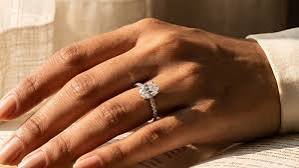
Oval lab grown diamonds usually look larger per carat. Their elongated shape covers more of the finger, so the same weight appears to have more presence. Round lab grown diamonds offer the most classic look and the most traditional sparkle.
So the answer depends on what you want. If size is your priority, an oval often delivers more visual impact. If timeless brilliance matters most, a round is hard to beat.
This guide compares the two shapes on finger coverage, sparkle, durability, and style. It will help you choose with confidence. If you already lean classic, you can browse our round cut lab grown diamond rings as you read.
Finger Coverage: How Size Is Perceived
Carat weight measures how much a diamond weighs. It does not measure how big it looks from above. Two diamonds with the same carat weight can have very different outlines. That is why shape matters so much.
Why Oval Diamonds Look Larger
An oval is stretched along one axis. When set north-south on the hand, it runs along the finger and covers more skin. That elongated outline spreads the stone’s weight across a larger face-up area.
Ovals also tend to be cut with a shallower profile than rounds. More of the stone’s weight is spread across the top and less sits hidden below the setting. The result is a stone that often looks bigger than a round of the same carat weight.
Why Round Diamonds Look Compact but Balanced
A round diamond has equal width and length. Its weight is spread evenly in every direction, so it looks neat and proportional. It appears a little smaller than an oval of the same carat weight, but it is not smaller in quality or value.
Many people love this compact look. It feels classic and sits comfortably on almost any hand.
What Affects Perceived Size
Several details change how large a diamond looks:
- Carat weight: A larger stone looks larger in any shape. The size gap between shapes becomes easier to notice as the carat weight grows.
- Length-to-width ratio: Ovals usually range from about 1.30 to 1.50. A higher ratio looks longer and slimmer. A lower ratio looks fuller and rounder. Ratio is a matter of taste, so look at photos or videos to see which you prefer.
- Setting style: Thin bands and slim prongs make a stone look larger. A halo adds extra diamonds around the center and can increase the ring’s overall presence. A bezel sets the diamond in metal, which can slightly reduce visible size.
Which Shape Flatters Which Hands?
There is no strict rule, but these guidelines can help:
- Short or small fingers: An oval’s lengthwise line can create a longer, slimmer look. A smaller round can also look dainty and balanced.
- Long, slender fingers: Both shapes work. A round looks refined, and a larger oval looks elegant.
- Wider fingers: An oval can balance a broader hand. A round with a slim band also looks polished.
Try on both shapes if you can. Comfort and personal style matter as much as proportions.
Sparkle: Classic Brilliance vs. Elongated Glow
Round: All-Around Brilliance
The round brilliant is famous for exceptional light dispersion and all-around brilliance. Its facet pattern has been refined over many years. Light enters the stone, bounces inside, and returns evenly through the top. The sparkle looks lively and consistent from every angle.
If you want the traditional diamond look people picture first, round is the standard.
Oval: Elongated Sparkle and the Bow-Tie Effect
An oval is also a brilliant cut, so it sparkles beautifully. Its glow looks longer and softer than a round’s.
Many ovals show a bow-tie effect. This is a darker, bow-tie-shaped area across the center of the stone. It appears because some light does not return to your eye from that spot. A mild bow-tie is common and often goes unnoticed. A strong one can look distracting.
To reduce the bow-tie, look for an oval with a well-balanced cut and good proportions. Watch the stone’s video in motion if the retailer offers one.
Classic or Distinctive?
Ask yourself what you want when light hits the ring:
- Classic and crisp: Round.
- Distinctive and elongated: Oval.
Both are lovely. It comes down to the character you want in your ring.
Durability: Everyday Wear
Round Diamonds Have No Pointed Corners
A round diamond has no corners. Its smooth outline makes it less likely to catch on fabric or take a hit at a vulnerable point. That makes it a strong choice for daily wear.
No diamond is indestructible, but the round shape is generally considered very durable for everyday life.
Oval Diamonds Need Care at the Ends
Ovals have rounded outlines, so they are more forgiving than shapes with sharp corners such as princess cuts. Still, the two ends of an oval are narrower and a little more exposed. A hard knock at those points can cause a chip.
Protective settings help. Consider:
- V-prongs or double prongs at the oval’s ends for extra coverage.
- A bezel setting that wraps the stone in metal.
- A halo that adds a protective outer edge.
Advice for Active Lifestyles
If you work with your hands, lift weights, garden, or play sports:
- Choose a round or a well-protected oval in a bezel or halo setting.
- Pick a setting that sits lower on the finger.
- Remove your ring during heavy workouts or rough tasks.
- Have a jeweler check the prongs once a year.
Style: Timeless vs. Modern
Round: Timeless and Versatile
Round diamonds suit almost every setting. They look elegant in solitaires, halos, three-stone designs, and pavé bands. They fit traditional engagement rings and also modern ones.
If you want a ring that will always feel appropriate, a round is a safe and beautiful choice.
Oval: Modern, Elegant, and Elongating
Ovals feel fresh and refined. They are popular in hidden halo settings, East-West settings, and vintage-inspired designs. Many people also love how an oval can make the finger look longer.
Pairing With a Wedding Band
Your center stone shape can affect which band sits best next to it. A round solitaire usually pairs easily with a straight band. An oval may sit better with a slightly curved or notched band. For ideas on matching and choosing, see this lab grown diamond wedding bands buying guide.
Round vs. Oval: Comparison Table
| Feature | Round | Oval |
|---|---|---|
| Appearance | Classic, symmetrical, compact | Elongated, modern, elegant |
| Finger Coverage | Moderate | Often greater per carat |
| Sparkle | Exceptional all-around brilliance | Elongated sparkle, may show a bow-tie |
| Durability | Very durable, no corners | Durable, ends benefit from protection |
| Popular Settings | Solitaire, halo, three-stone, pavé | Hidden halo, solitaire, East-West, vintage-inspired |
| Best-Suited Style | Timeless and traditional | Modern and distinctive |
Which Diamond Shape Looks Bigger?
At the same carat weight, an oval usually appears larger than a round. Its greater surface area and elongated outline make it cover more of the finger.
The difference is not dramatic in every case. Cut quality, length-to-width ratio, and setting style all play a part. But if you want the most visual size for your budget, an oval is a strong option.
Which Should You Choose?
Choose Round If You Want:
- Timeless elegance that never goes out of style.
- Maximum brilliance from every angle.
- Everyday durability with no pointed ends to protect.
Choose Oval If You Want:
- A larger-looking diamond for the carat weight.
- Modern style with a graceful, softer outline.
- An elongated finger appearance that feels refined.
Not sure? Look at both shapes at the carat weight you have in mind. See them on a hand if you can, and view them in motion.
Frequently Asked Questions
Do oval diamonds look bigger than round diamonds?
Usually, yes. At the same carat weight, an oval’s elongated shape covers more of the finger, so it often appears larger.
Which shape sparkles more: round or oval?
Round diamonds are known for exceptional all-around brilliance. Ovals sparkle beautifully too, with a longer, softer glow. Which looks better is a matter of taste.
Are oval lab grown diamonds more expensive than round ones?
Not usually. Round diamonds often cost more per carat because of high demand and more waste when the rough stone is cut. Prices vary by retailer and quality, so compare stones with the same 4Cs and certification.
Which shape is better for small hands?
Both can work. An oval’s elongated line can make fingers look longer, while a smaller round looks delicate and balanced. Try both on if you can.
Are oval diamonds less durable than round diamonds?
Ovals are very wearable, but their narrow ends are more exposed than a round’s smooth edge. A protective setting, such as V-prongs or a bezel, helps.
What is the bow-tie effect in oval diamonds?
It is a darker, bow-tie-shaped area across the center of an oval. It happens when light does not return evenly to your eye. A mild bow-tie is common, and a well-cut stone can reduce it.
Conclusion
Both shapes are beautiful, and neither is a wrong choice. Oval lab grown diamonds usually look larger per carat and feel modern and elongating. Round lab grown diamonds offer classic sparkle and everyday strength.
Choose the shape that matches how you want your ring to look and live on your hand. If round feels like you, explore our round cut lab grown diamond rings. When you are ready to choose a matching band, read this lab grown diamond wedding bands buying guide.